
01
Your local outlook
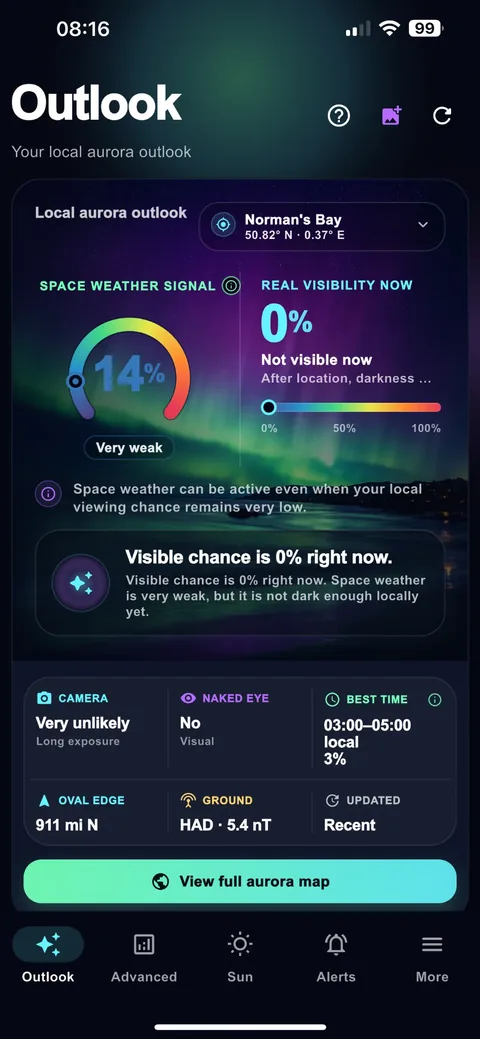
Space-weather support and real visibility are separated, so a strong solar signal is never confused with a clear local sky.
Aurora intelligence for real observers
Aurora Beacon brings the Sun, solar wind, geomagnetic response, cloud, darkness and your location together — then turns it into a clear answer about tonight.
Tonight, made clear
Aurora Beacon is designed around the question most people actually have: is it worth going outside tonight? The simple answer stays on Outlook; the detail is there whenever you want to inspect it.
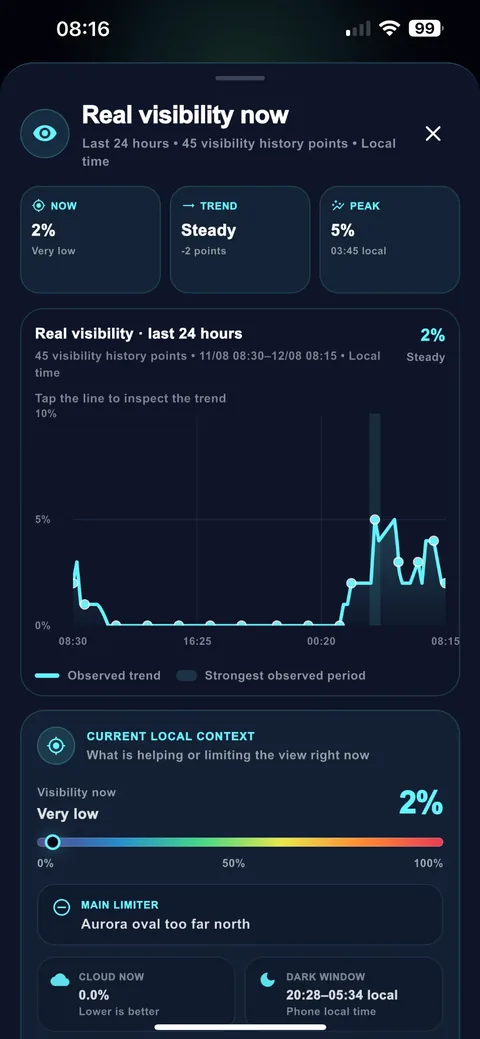
Space-weather support and real visibility are separated, so a strong solar signal is never confused with a clear local sky.
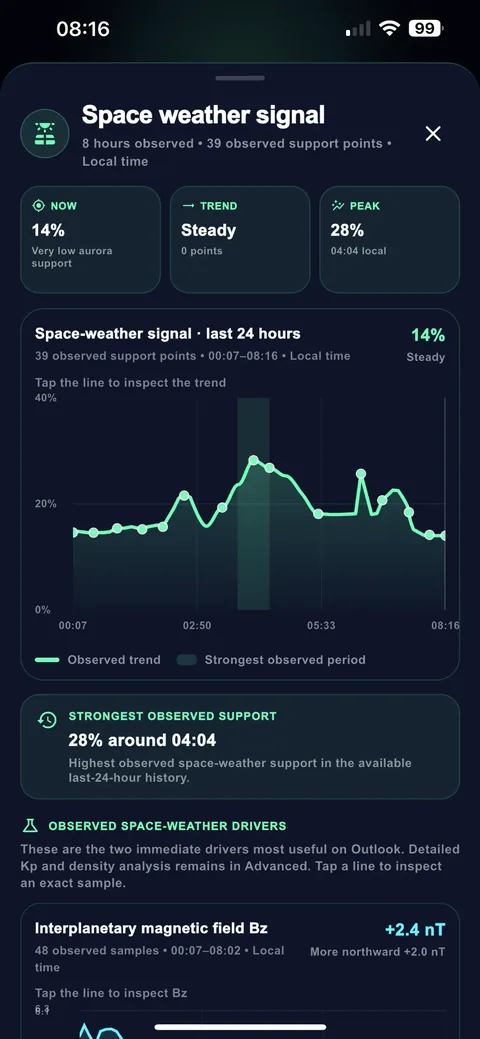
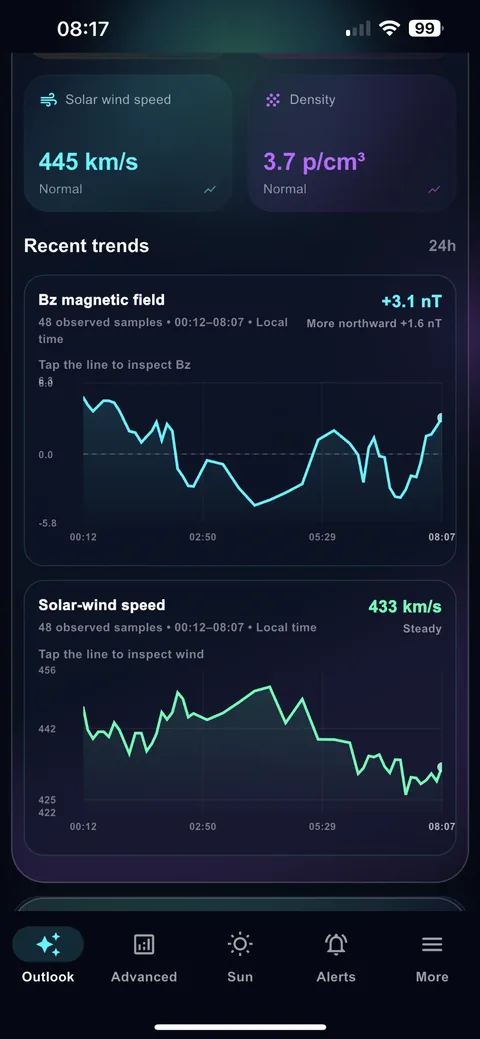
Open the Space Weather Signal for a last-24-hour view, peak period and the immediate Bz and solar-wind drivers behind the score.
Real Visibility explains cloud, darkness and the biggest local limiter, with a history view showing when observing conditions were strongest.
Why Aurora Beacon
A global index can tell you that something is happening. It cannot, on its own, tell you whether your sky is usable, which horizon is darker, whether nearby ground stations are responding, or when tonight is most worth your time.
Open Outlook and get the practical answer first: space-weather support, real visibility, the best window and the biggest thing helping or limiting your chances.
Move from the simple answer into solar wind, Bz, recent trends, regional magnetometers, solar events and historical geomagnetic context when you want the full story.
Aurora Beacon keeps the upstream signal and your real local sky separate, so a promising solar signal is never mistaken for a clear observing opportunity.
Darkness, cloud, Moon, location and nearby regional evidence are brought into the decision instead of leaving you with a global number to interpret.
The aurora map, light-pollution map, Viewing Spots and Horizon Compass help answer the next question: where should you actually go and which way should you face?
Scores, trends and viewing guidance can be opened up. The app is designed to show the evidence behind its interpretation rather than hide it behind a single percentage.
Outlook, the full aurora map, immediate local alerts and Community remain part of the free experience.
Maps built for decisions
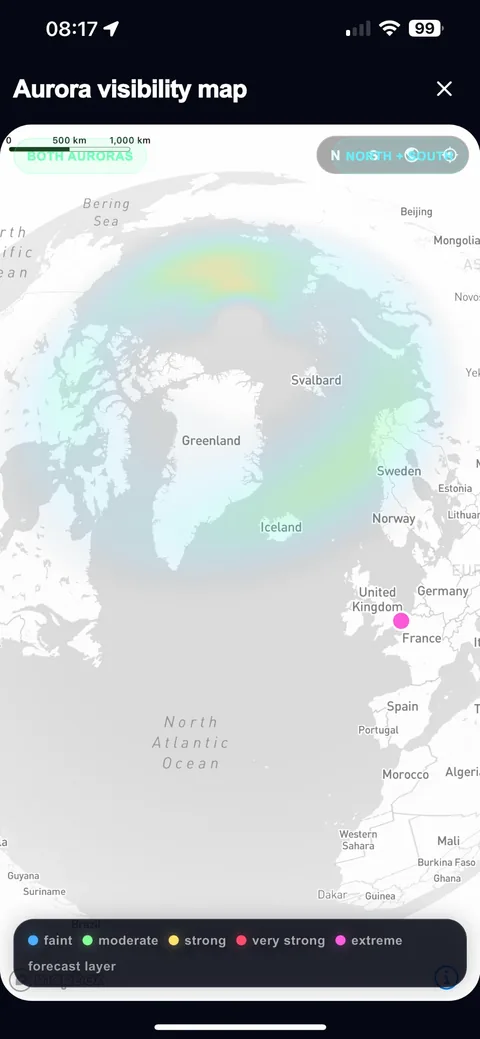
Two very different maps answer two different questions. The aurora map shows where activity may reach. The observing tools help you find a better place to stand.
Zoom out for the wider picture or move in toward your location. The map shows forecast auroral intensity in context rather than reducing the night to a single Kp number.
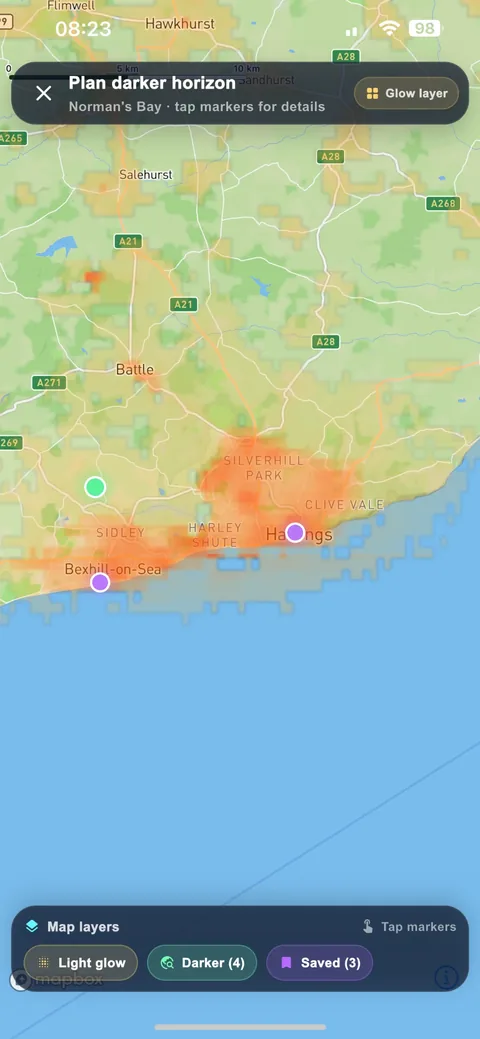
Seeing an aurora is not only about solar activity. Nearby sky glow can wash out a weak display, so Aurora Beacon helps you understand where the brighter horizon sits and whether a darker nearby option may be worth considering.
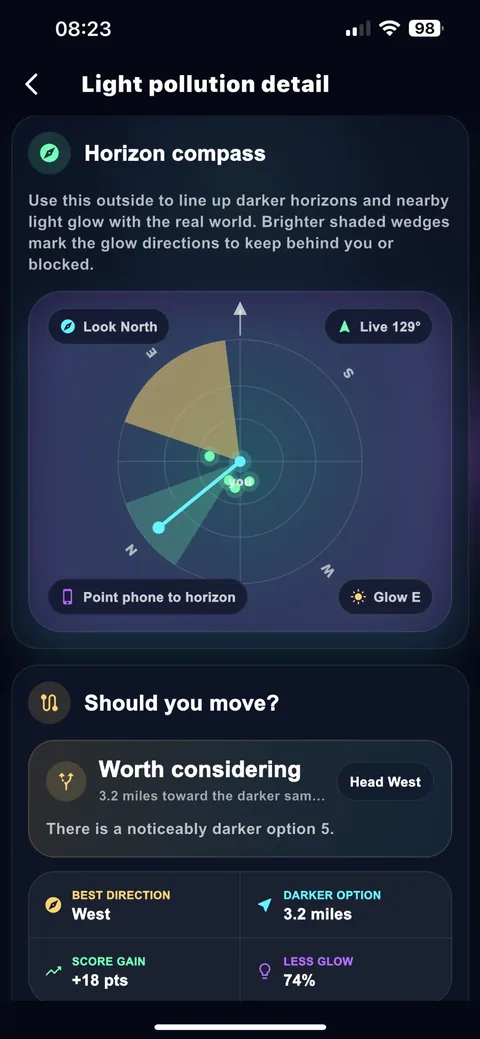
Once you are outside
The Horizon Compass translates nearby light glow into the direction you are actually facing. It can show which glow to keep behind you, suggest a darker direction and estimate whether moving could materially improve the observing position.
Follow the story from the source
Aurora Beacon connects the pieces that are usually scattered across different specialist sites: what happened on the Sun, what may be travelling toward Earth, what the solar wind is doing now, and how the ground is responding.
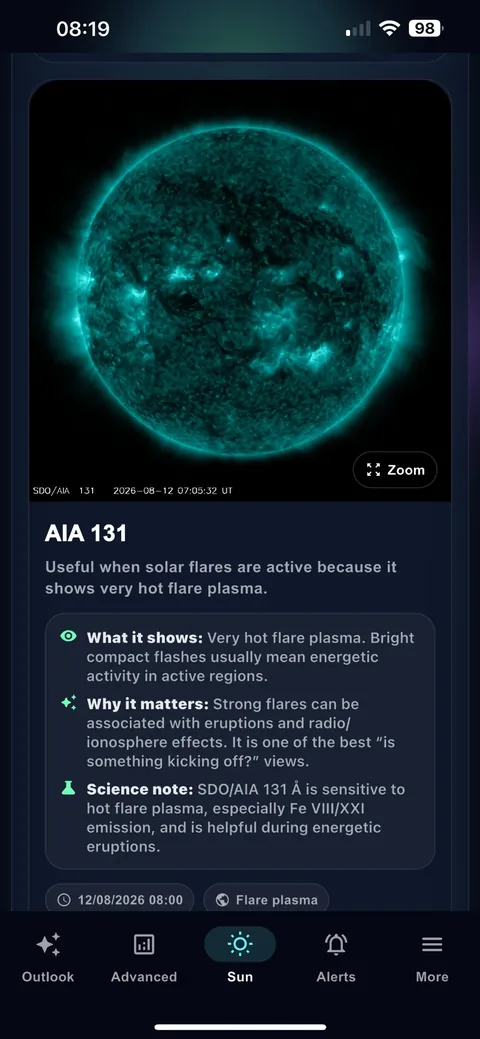
Multiple solar views explain what each wavelength is useful for — including hot flare plasma and active regions.
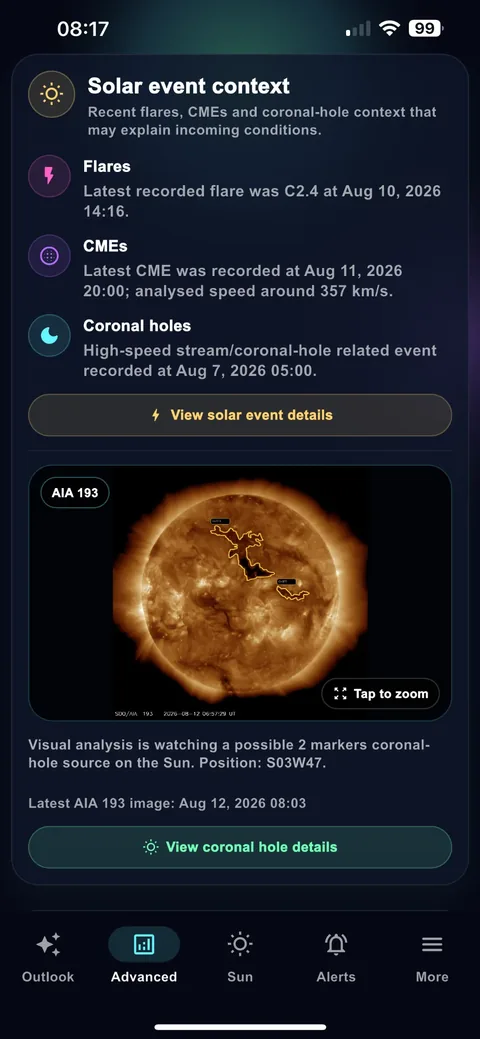
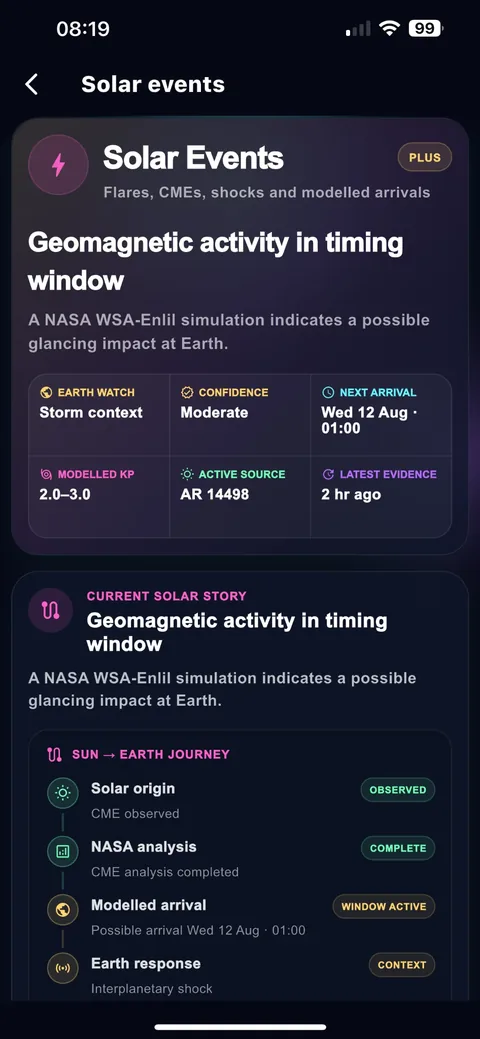
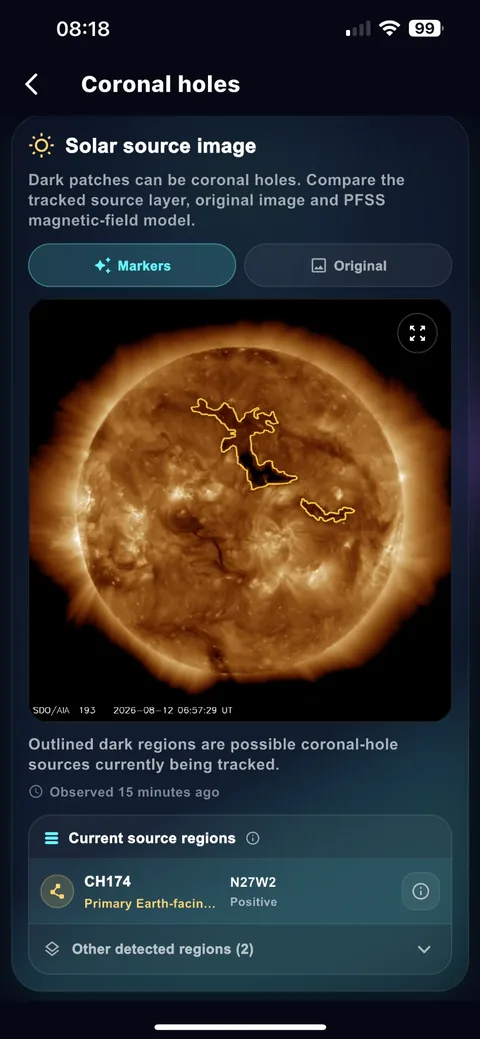
Recent flares, CMEs and coronal-hole context sit together, helping explain why incoming conditions may be changing.
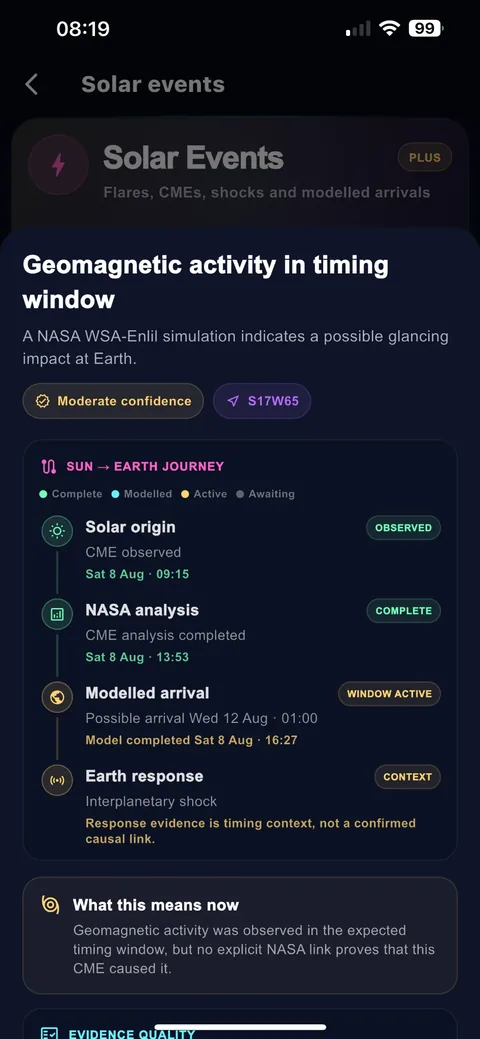
Follow observed solar origin, NASA analysis, modelled arrival windows and later Earth-response evidence — while keeping confidence and causality explicit.
Advanced intelligence
Advanced brings the forecast, solar wind and geomagnetic evidence together in one place. Recent-trend charts keep the latest Bz and wind behaviour visible without asking you to interpret raw feeds from scratch.
See what Plus adds →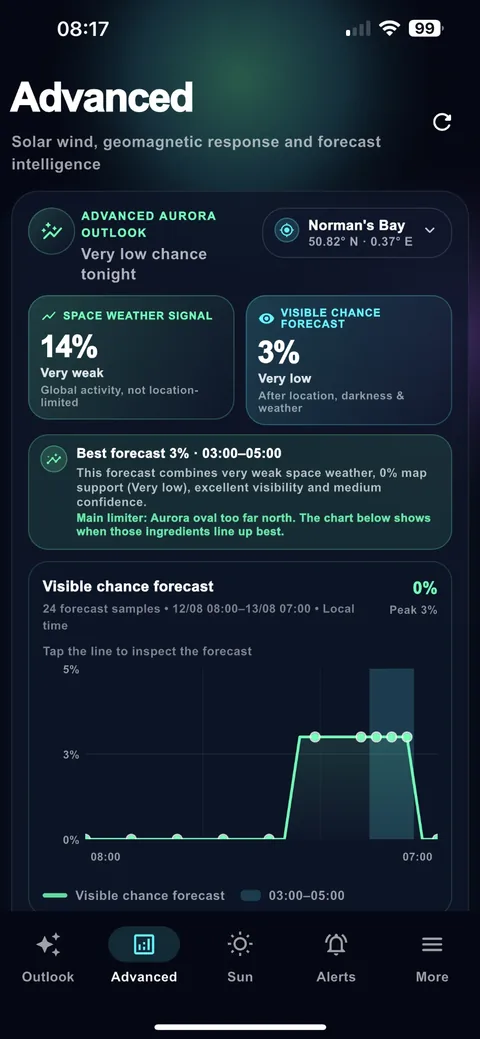
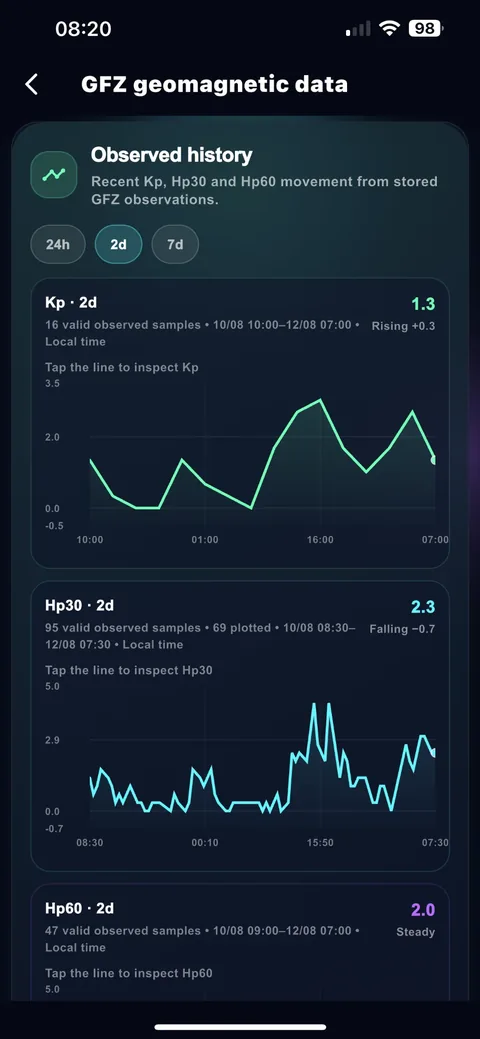
Regional ground signals
Regional magnetometer data adds something a global index cannot: evidence of where magnetic disturbance is actually being detected on the ground.
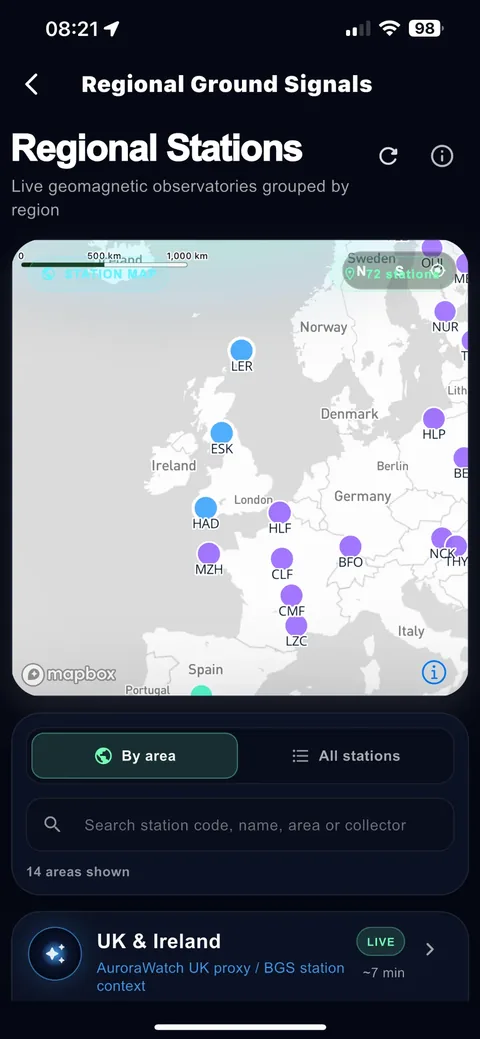
Browse live observatories by area and see which networks are contributing current context.
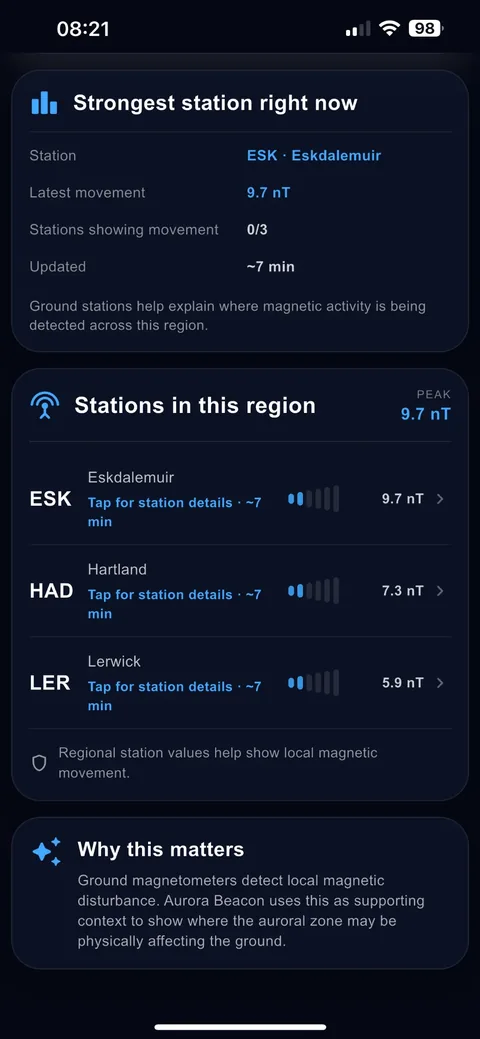
See the strongest station, freshness and movement across the stations in the selected region.
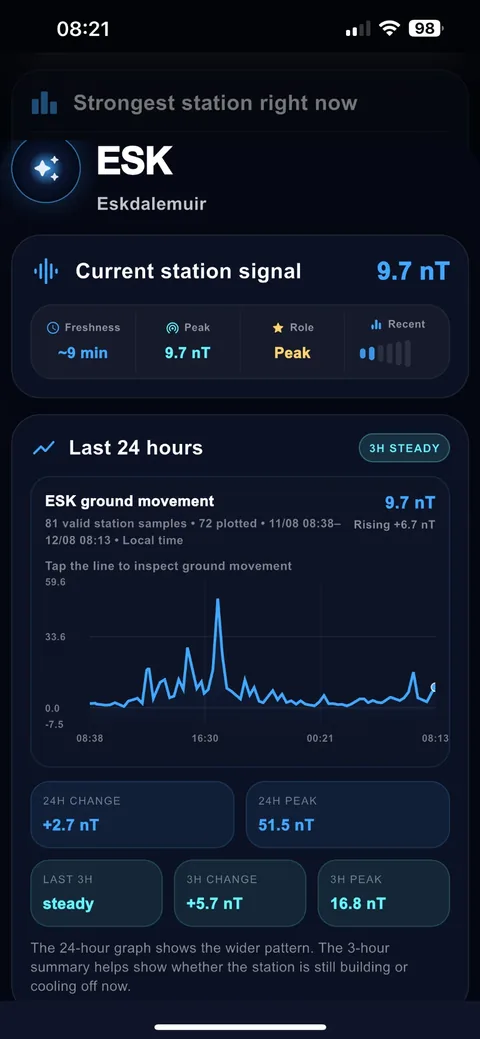
Open the full 24-hour pattern, short-term movement, peak values and whether the signal is building or cooling off.
Plan before you leave
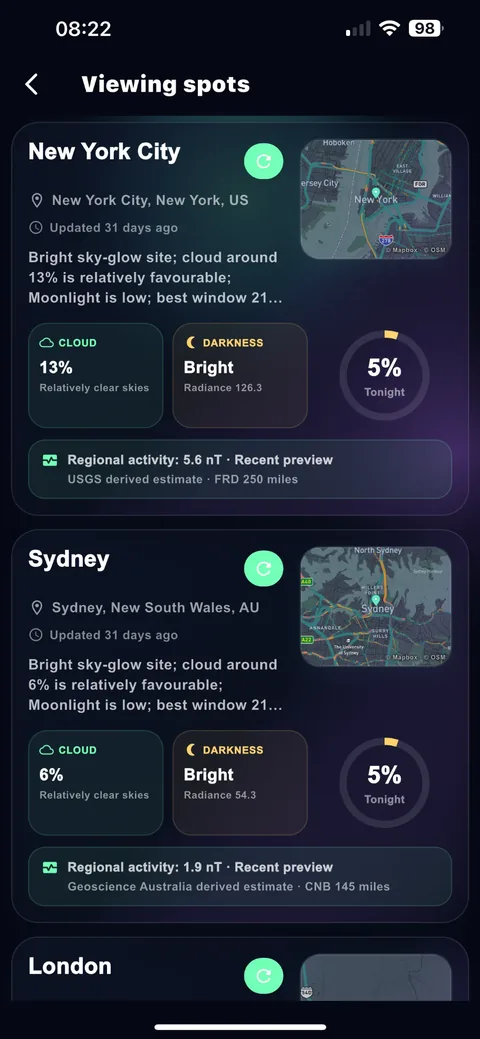
Save or compare places across different regions. Each card combines cloud, darkness, sky-glow and recent regional activity so the location is judged for tonight, not just because it looks dark on a map.
A night with Aurora Beacon
The useful part of an aurora app is not one screen. It is the chain of decisions between wondering whether anything might happen and standing somewhere dark enough to see it.
A local alert gives you a reason to look, without treating every upstream fluctuation as an emergency.
See whether the space-weather signal and your actual local viewing conditions agree.
Put your location against the forecast auroral oval and understand the geographic context.
Compare cloud, darkness, light glow and recent regional activity at saved or candidate locations.
Once outside, use nearby glow direction and darker alternatives to improve the observing position.
See approved sightings and contribute to the record of the night without exposing a precise private location.
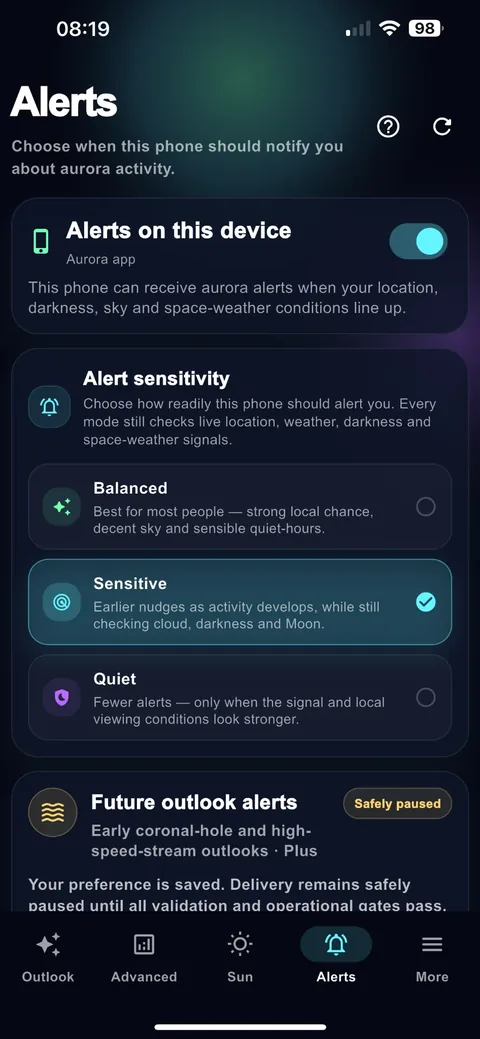
Alerts
Choose how readily the phone should alert. Every mode still considers live location, darkness, sky and space-weather conditions rather than treating every upstream change as a reason to interrupt you.
Immediate local aurora alerts are included without Plus.
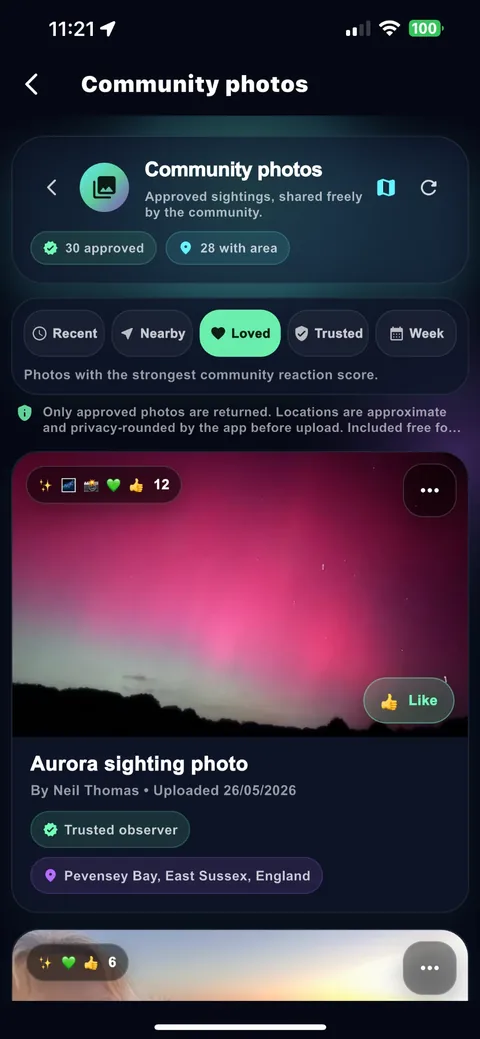
Community
Approved aurora photographs add the human view of the night sky. Reactions and trusted contributions help surface useful sightings while public locations remain approximate rather than exposing a precise private position.
Share the experience without turning location privacy into a trade-off.
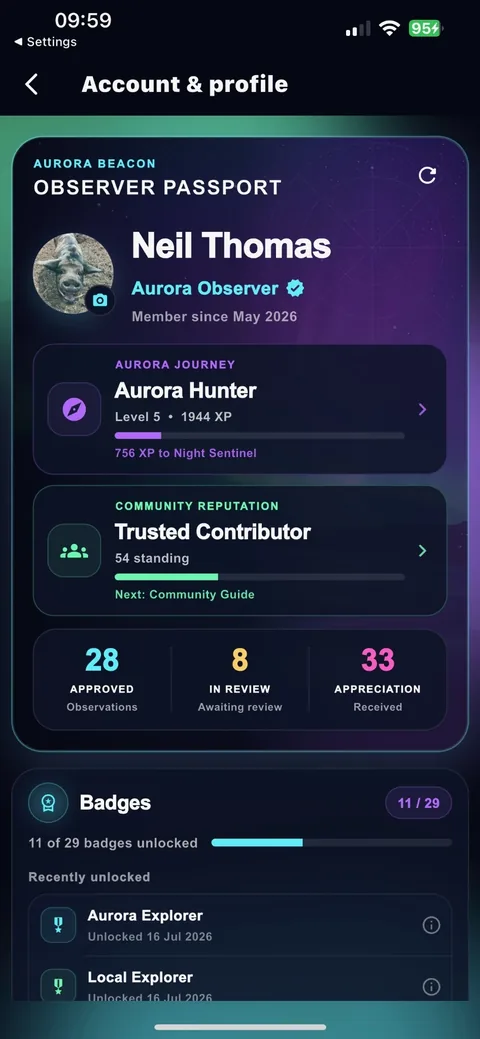
Observer Passport
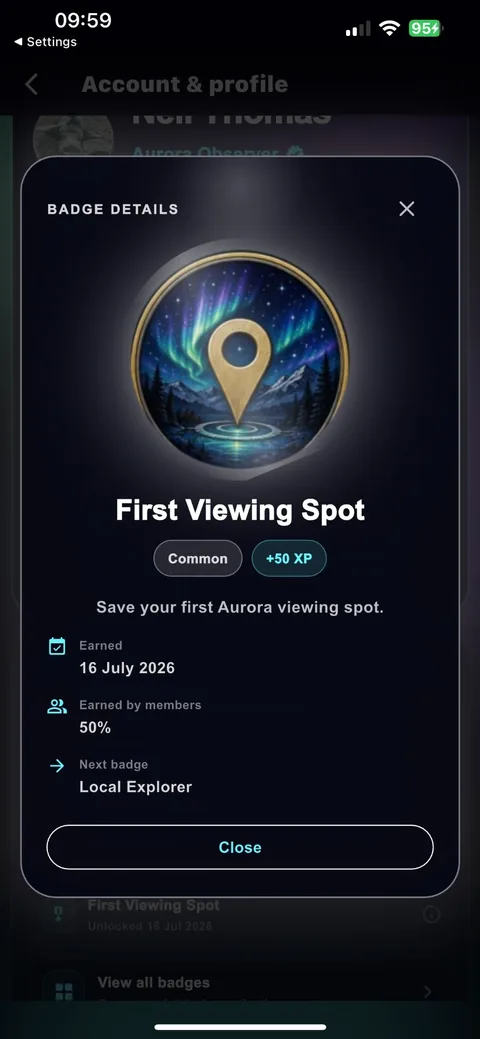
Your profile brings together Aurora Journey progress, Community Reputation, contributions and badges. It is deliberately secondary to the observing tools — a record of what you have done, not a game you have to play.
The core experience remains useful for everyone. Plus is for observers who want to look further ahead and inspect the deeper space-weather story.
Questions before you download
Aurora forecasting is uncertain by nature. Aurora Beacon is built to make that uncertainty more useful, not to pretend it can guarantee a display.
Read the science & data approach →Yes. The core experience includes Outlook, the full aurora map, immediate local alerts and Community. Aurora Beacon Plus adds deeper Advanced intelligence, Coronal Hole Watch, Solar Events and future / HSS outlook alerts.
No. Outlook is deliberately designed to give the practical answer first. More technical screens are there when you want to inspect the evidence, but you do not need to understand every solar-wind chart to use the app.
No. Kp can be useful context, but visibility also depends on location, darkness, cloud, sky glow and how conditions evolve. Aurora Beacon keeps the space-weather signal and real local visibility separate for exactly that reason.
Location can be used to tailor local darkness, weather, aurora visibility, observing context and relevant regional evidence. Community locations are intended to remain approximate rather than exposing a contributor’s precise private position.
Regional coverage depends on the observatory networks, data availability and permissions supported for an area. Where regional evidence is available, it supplements rather than replaces the wider space-weather picture.
Aurora Beacon is available now for iPhone on the App Store and for Android on Google Play.
Built to earn trust
The app should help you make a better decision without overstating what space-weather forecasting can know.
Aurora Beacon’s own scores, trends and interpretations are labelled as Aurora Beacon products rather than presented as official observatory or agency indices.
Science & data →The simple answer can be opened into recent trends, solar-wind drivers, geomagnetic history and regional observations when you want to check what sits underneath it.
Explore intelligence →Community contributions are designed around approximate public location rather than turning a precise private observing position into part of the social experience.
Privacy →Conditions can change quickly. Aurora Beacon provides guidance and context, while safe travel, access, weather and observing decisions remain with the user.
Terms & safety →
Aurora Beacon
Aurora Beacon is available now on the App Store and Google Play.
Inside Aurora Beacon
This screen tour moves continuously. Hover over it to pause on desktop.